8 Signs an Elderly Person Needs a Caregiver
8 Signs an Elderly Person Needs a Caregiver
Recognizing when an aging loved one needs help can be difficult. Many older adults value their independence fiercely, and family members often hesitate to step in. But spotting the warning signs early can prevent accidents, improve quality of life, and ensure the elderly person in your life stays safe and well-cared for.
Here are 8 signs that suggest it may be time to consider hiring a caregiver or transitioning to a more supportive care arrangement.
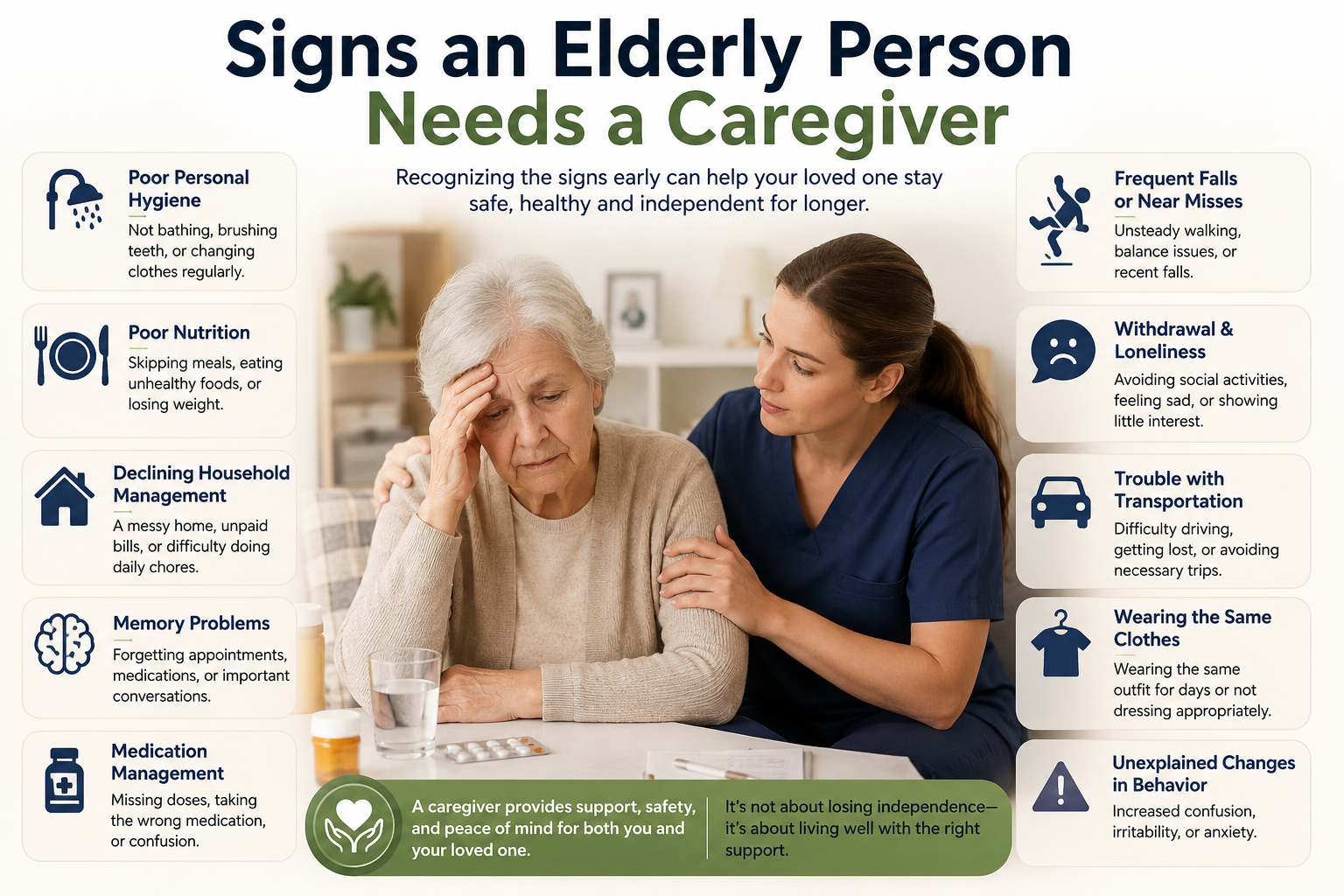
1. Decline in Personal Hygiene
One of the most telling signs is a noticeable change in grooming habits. An elderly person who once kept up with regular bathing, brushing their teeth, or wearing clean clothes may suddenly neglect these routines. This could be due to physical limitations or cognitive decline.
If you notice a persistent body odor, unwashed hair, or dirty fingernails, your care provider is likely struggling to manage daily tasks alone.
2. Spoiled Food or Empty Fridge
Nutrition plays a huge role in senior safety. When you visit, check the kitchen. Are there expired items, leftover too old or fur on the bread sprinkle? Or is the refrigerator surprisingly empty? This is a red flag.
Losing interest in cooking, forgetting to eat, or struggling to stand long enough to prepare meals means the elderly person may need a caregiver who can help with meal planning, grocery shopping, and cooking nutritious food.
3. Social Withdrawal and Isolation
Is your elderly loved one no longer answering the phone, canceling appointments with friends, or skipping church services? New or worsening withdrawal is often a sign of depression or undiagnosed pain.
Isolation can quickly lead to a worsening physical and mental health. A caregiver can provide important companionship, transport, and help them re-engage with the world socially.
4. Significant Unintended Weight Loss
Look out for clothes that seem looser than usual or a frail appearance. Weight changes can mean the person isn’t getting enough food, has trouble swallowing or tasting, or may have an underlying health condition.
Today’s nutritional concerns are worth noting. Bringing in professional help that can help you monitor healthy weight and ensure meals are eaten regularly is often a necessary. An experienced caregiver will also report on any changes in the senior.
5. Falls and Bruises
Falls are one of the leading causes of hospital stays for people over 65. If your older relative has recently taken a spill, or you notice unusual bruises, scratches, or unsteadiness when they walk, the home may not be safe for a solo dweller.
A caregiver can assist with mobility, removing trip hazards, and providing guidance during physical movement. What would reduce the home fall risk and increase overall home safety.
6. Medication Management Problems
Keeping track of prescription bottles can be overwhelming for anybody.
If you find pills scattered on the counter, extra old prescriptions, expired pills, or the shifting pain for correct dosage on several occasions, the person is at high risk for medication errors. If they have three or more pills daily, along with chronic health conditions, a caregiver can be invaluable in making sure a pillbox is organized and a schedule is followed.
7. Poor Household Maintenance and Less Interest in Things
The household condition is often a good judge. Are rooms getting increasingly messy or cluttered? Unpaid letters and bills stacking up? Piles or unopened mail and generally chaotic home can reflect changes in executive function.
Additionally, if your elderly person has lost interest in hobbies they love such as gardening, reading, or knitting, this can signal depression or dementia. Be proactive in discussing this with them to determine if they need personal care assistance.
8. Old-Driving and Getting Lost
Driving is one of the hardest milestones to give up. Notice dents, scrapes on the car, near-misses, or they arrive to visit later and frazzled or disoriented. Are you getting confused on familiar routes?
Transportation is a major quality-of-life issue. A caregiver can offer safe transportation and help them get where they need to go, removing the risk.
Final Thoughts: Start the Conversation Early
If you see a combination of these warning signs, don’t wait for a crisis. Having a frank, loving conversation can make all the difference. A caregiver isn’t about restriction; it’s about offering the elderly person a higher quality of life and ensuring you are always safe.
Share your concerns early and often. You will also help your elderly relative than worrying about the potential blow. Livable daily support, skilled, compassionate, and home companionship can provide the right level of help, so your senior can live safely in their own home for longer.
Share this content:


Post Comment