What Is the Best Blood Pressure Monitor for Seniors?
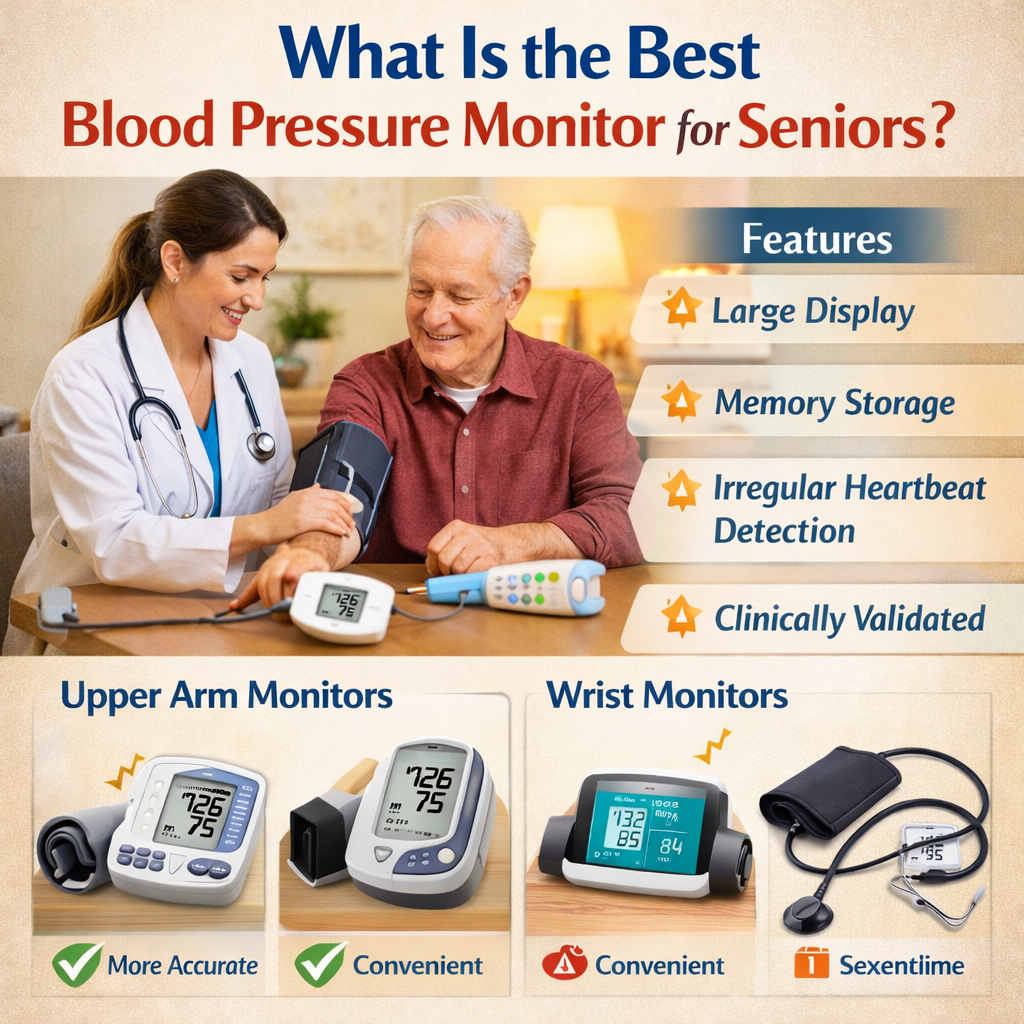
Best Blood Pressure Monitor for Seniors (Real Comparison & Buying Guide)
Choosing the best blood pressure monitor for seniors is not as simple as picking the cheapest or most popular device.
If you’ve ever tried to help an elderly parent use one, you already know the problem:
Small buttons, confusing screens, inconsistent readings.
I went through this myself while trying to find a reliable monitor for my father. What looked like a simple purchase turned into trial and error.
This guide is based on what actually works in real life, not just product descriptions.
Why Blood Pressure Monitoring Matters More for Seniors
Blood pressure fluctuations become more common with age. Conditions like hypertension can develop quietly without obvious symptoms.
That’s why regular monitoring at home is critical.
But here’s the problem most people overlook:
👉 A complicated device won’t be used consistently.
And a device that isn’t used is useless.
What Makes a Blood Pressure Monitor “Senior-Friendly”?
Before jumping into recommendations, you need to understand what actually matters.
1. Ease of Use (Non-Negotiable)
If the device requires too many steps, it won’t be used properly.
Look for:
- One-button operation
- Automatic inflation
- Clear instructions
2. Large, Readable Display
Many seniors struggle with vision.
A good device should have:
- Large numbers
- Bright screen
- Simple layout
3. Accuracy and Clinical Validation
Accuracy is everything.
Choose monitors that are:
- Clinically validated
- Recommended by healthcare professionals
4. Memory Function
Tracking readings over time helps identify patterns.
Devices with memory storage allow:
- Multiple readings saved
- Easy sharing with doctors
5. Comfortable Cuff Size
Incorrect cuff size leads to wrong readings.
Make sure:
- The cuff fits properly
- It’s easy to wrap around the arm
Real-Life Comparison: What Actually Works
After testing different models, here’s what stood out.
🥇 1. Best Overall: Simple Upper Arm Monitor
This type of monitor consistently delivered the best balance between accuracy and ease of use.
Why it works:
- Minimal buttons
- Reliable readings
- Comfortable cuff
Downside:
- Slightly bulkier than wrist models
👉 Best for: Seniors who need a dependable daily monitor
🥈 2. Best for Simplicity: One-Touch Devices
Some monitors focus entirely on simplicity.
Press one button, and everything happens automatically.
Why it works:
- No confusion
- Fast readings
- Ideal for non-tech users
Downside:
- Fewer advanced features
👉 Best for: Seniors who struggle with technology
🥉 3. Best Budget Option
Affordable monitors can still be effective if chosen carefully.
Why it works:
- Lower cost
- Basic functionality
- Good for occasional use
Downside:
- Less durable
- Limited features
👉 Best for: Occasional monitoring
⚠️ Wrist Monitors (Use with Caution)
Wrist monitors are popular because they are portable.
But here’s the truth:
👉 They are more sensitive to positioning errors.
If not used correctly, readings can be inaccurate.
Common Mistakes People Make (And Regret Later)
❌ Choosing Based on Price Alone
Cheap devices often lead to unreliable readings.
❌ Ignoring Ease of Use
A complicated device will end up unused in a drawer.
❌ Not Checking Accuracy
Without clinical validation, readings may be misleading.
Tips for Accurate Readings at Home
Even the best device won’t help if used incorrectly.
Follow these simple rules:
- Measure at the same time each day
- Sit calmly for 5 minutes before measuring
- Keep the arm at heart level
- Avoid caffeine before measurement
Final Verdict
If you want one simple recommendation:
👉 Go for a clinically validated upper arm monitor with a large display and one-button operation.
It’s the safest choice for most seniors.
Disclaimer
This content is for informational purposes only and does not replace professional medical advice. Always consult a healthcare provider for medical concerns.
Share this content:

Post Comment