Daily Routine for Elderly at Home

Daily Routine for Elderly at Home: A Practical Guide for Caregivers
Creating a daily routine for an elderly person at home sounds simple until you actually try to organize an entire day around another person’s needs.
There is waking up, breakfast, medications, personal hygiene, movement, appointments, meals, rest, household tasks, and social interaction. Then there are the unexpected things: a senior who suddenly does not want breakfast, a nap that lasts much longer than usual, difficulty getting dressed, or a morning when getting out of bed simply takes twice as long.
A good elderly care routine is therefore not a military schedule. It is a flexible framework that gives the day structure while leaving enough room for the person’s physical condition, preferences, energy level, and independence.
For families caring for an older parent or relative at home, this distinction can make a huge difference.
The goal is not to fill every minute.
The goal is to create a day that feels safe, predictable, meaningful, and manageable.
Medical disclaimer: This article provides general information about organizing daily life for an older adult at home. It does not replace individualized medical, nursing, physical therapy, nutritional, or other professional advice. Medication schedules, dietary restrictions, exercise, and personal-care requirements should follow the recommendations of the person’s healthcare team.
Why a Daily Routine Matters for Older Adults
Older adults often benefit from having predictable patterns throughout the day.
That does not mean every activity has to happen at exactly the same minute. Rather, familiar sequences can make everyday activities easier to anticipate.
For example:
Wake up → bathroom → wash → get dressed → breakfast → medication if prescribed → morning activity → rest → lunch → afternoon activity → dinner → evening routine → bedtime
The specific order will vary from person to person.
What matters is consistency.
A routine can also help caregivers notice changes.
Imagine that an older parent normally gets up at 7:30, eats breakfast at 8:00, and spends some time walking around the house afterward. If they suddenly sleep until noon, refuse breakfast, appear unusually confused, or seem much weaker than usual, the change becomes noticeable.
The routine is therefore not simply a timetable.
It can also become a way of observing someone’s normal pattern.
What Makes a Good Daily Routine for an Elderly Person?
A useful routine should include several basic areas:
- Personal hygiene
- Meals and hydration
- Medication management when prescribed
- Safe physical activity appropriate to the person’s abilities
- Rest and sleep
- Social interaction
- Mental stimulation
- Personal choice and independence
- Time for caregivers to recover
The mistake is trying to optimize all of these at once.
A senior may not have the energy to shower, walk outside, attend an appointment, socialize, and complete several household activities on the same morning.
A better approach is to spread activities throughout the day.
A Sample Daily Routine for Seniors at Home
Every person’s schedule should be individualized, but the following example provides a useful starting point.
| Time | Possible Activity |
|---|---|
| 7:00–8:00 AM | Wake up, bathroom, personal hygiene |
| 8:00–9:00 AM | Breakfast and prescribed morning medications |
| 9:00–10:00 AM | Light movement or short walk, if appropriate |
| 10:00–11:00 AM | Rest, reading, music, or quiet activity |
| 11:00 AM–12:00 PM | Social interaction or household activity |
| 12:00–1:00 PM | Lunch and hydration |
| 1:00–2:30 PM | Rest or nap |
| 2:30–4:00 PM | Mental stimulation, hobby, appointment, or outdoor time |
| 4:00–5:30 PM | Light activity and snack if appropriate |
| 5:30–7:00 PM | Dinner and family time |
| 7:00–8:30 PM | Quiet activities and evening hygiene |
| 8:30–10:00 PM | Relaxation and bedtime routine |
This is an example, not a prescription.
Some seniors naturally wake earlier. Others function better later in the morning. Someone recovering from illness may need substantially more rest.
The routine should adapt to the individual rather than forcing the individual to adapt to the routine.
Morning Routine: Start Slowly
One of the biggest mistakes caregivers can make is treating the morning like a race.
Older adults may need more time to move from lying down to sitting, standing, walking to the bathroom, and getting dressed.
Instead of saying:
“Come on, we’re late.”
Try building extra time into the schedule.
A calmer morning can make the rest of the day easier.
Step 1: Allow Time to Wake Up
Give the person time to become fully awake before asking them to stand.
If they normally experience dizziness, weakness, or balance problems, speak with their healthcare professional about appropriate precautions.
Do not assume that a senior who can walk independently one day will have exactly the same ability every morning.
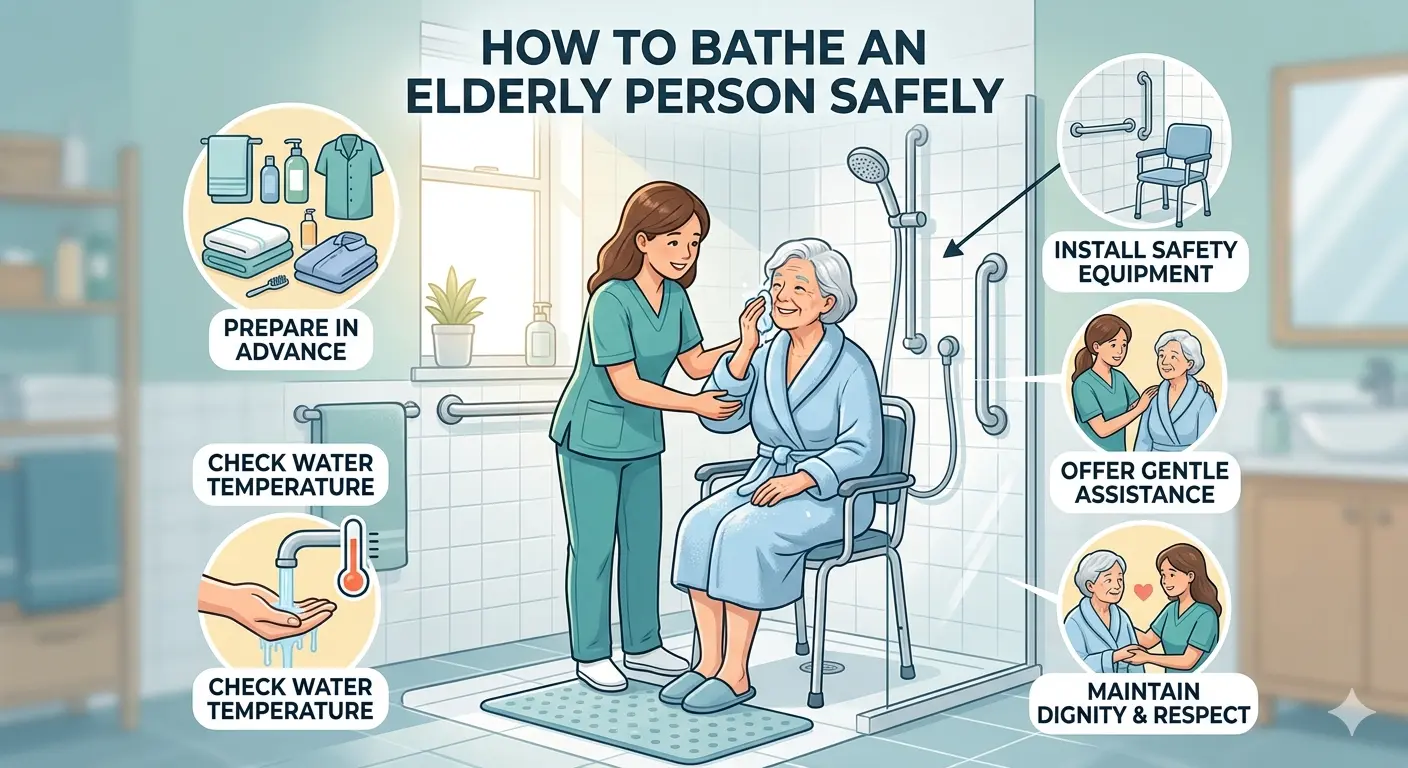
Step 2: Bathroom and Personal Hygiene
The morning bathroom routine may include:
- Using the toilet
- Washing the face
- Brushing teeth
- Hair care
- Showering or bathing when appropriate
- Changing clothes
Safety should come before speed.
Bathrooms can present significant fall hazards, especially when floors are wet.
Depending on the person’s needs, useful safety measures may include appropriate grab bars, non-slip surfaces, adequate lighting, and a suitable shower chair.
Any equipment should be appropriate for the individual’s mobility and installed correctly.
Breakfast: More Than Just a Meal
Breakfast is often one of the easiest opportunities to establish a predictable part of the day.
But caregivers sometimes become frustrated when an older adult does not eat as expected.
Appetite can change for many reasons.
Instead of automatically assuming the person is being difficult, consider what might be affecting their appetite.
For example:
- Is the portion too large?
- Is the food difficult to chew?
- Is the person tired?
- Are they eating alone?
- Has their usual eating pattern changed?
- Are there dietary restrictions prescribed by their healthcare team?
If poor appetite, swallowing difficulties, unexplained weight changes, or persistent difficulty eating are concerns, discuss them with an appropriate healthcare professional.
Make Breakfast Easier
Depending on the person’s dietary needs, breakfast might be kept simple.
The important principle is not to create a restaurant-quality meal every morning.
It is to make eating practical and consistent.
And there is another surprisingly important factor:
Company.
Sitting down together for breakfast can turn a task into a social activity.
Medication Routine: Use a System, Not Memory
Medication management deserves special attention.
Caregivers often think they will remember everything.
That approach becomes increasingly difficult when several medications, appointments, meals, and household responsibilities are involved.
A safer approach is to use a clearly organized system based on the person’s prescriptions and healthcare instructions.
Possible tools include:
- A written medication list
- Calendar reminders
- A medication organizer when appropriate
- Phone alarms
- A medication administration record for caregivers
- A designated place for medication storage
Do not change medication doses, timing, or frequency without appropriate medical guidance.
If a dose is missed or medication is accidentally taken incorrectly, contact the appropriate healthcare professional or pharmacist for guidance rather than guessing what to do next.
Morning Activity: Movement Without Turning It Into a Workout
Physical activity can be an important part of healthy aging, but there is no universal exercise routine that is appropriate for every senior.
A person who walks independently has different needs from someone recovering from surgery or using a walker.
That is why the question should not simply be:
“How much exercise should a senior do?”
A better question is:
“What type and amount of movement is appropriate and safe for this individual?”
A healthcare professional or physical therapist can help determine what is suitable.
For some people, this may involve a short walk around the home.
For others, it may involve prescribed exercises, supported movement, or simply changing positions regularly.
The key is individualization.
The Importance of Preserving Independence
This is one of the hardest lessons for family caregivers.
When you love someone, your instinct is often to help with everything.
But doing everything for an older adult can unintentionally remove opportunities for independence.
If your parent can safely choose their clothes, let them choose.
If they can prepare part of breakfast safely, allow them to participate.
If they can fold towels, water plants, organize photographs, or help with another suitable household task, those activities can provide a sense of usefulness.
The goal is not to make the senior dependent on the caregiver for every part of the day.
The goal is to provide the right amount of support.
Late Morning: Keep the Mind Engaged
After breakfast and morning activity, many seniors have a period when they are alert and comfortable.
This can be a good time for mentally engaging activities.
Examples include:
- Reading
- Listening to music
- Looking through family photographs
- Puzzles
- Writing
- Crafts
- Gardening activities
- Conversations about familiar memories
- Watching a favorite educational program
- Calling a friend or family member
The activity does not need to be intellectually demanding.
A person does not need to complete crossword puzzles for an hour to have a meaningful morning.
Sometimes sitting by a window and talking about the weather is enough.
Lunch: Another Anchor in the Day
A predictable lunch time can help divide the day into manageable sections.
Try to avoid making lunch unnecessarily complicated.
If the person has difficulty preparing food independently, the caregiver may handle the cooking while allowing the senior to participate in safe ways.
For example, they might:
- Choose between two meal options
- Set napkins on the table
- Wash suitable produce
- Sit with the family during preparation
Again, participation matters.
Afternoon Routine: Respect the Energy Dip
Many older adults need a quieter period after lunch.
Rest can be valuable, but an excessively long or irregular daytime sleep schedule may interfere with nighttime sleep for some people.
If daytime sleeping becomes frequent or unusually prolonged, discuss the pattern with a healthcare professional, especially if it represents a significant change from the person’s normal behavior.
After rest, the afternoon can include a lighter activity.
This might be:
- A short walk if appropriate
- Sitting outdoors
- Visiting family
- Listening to music
- A hobby
- Reading
- A medical appointment
- A simple household activity
The afternoon does not have to be packed.
Hydration Throughout the Day
Hydration is easy to overlook.
An older person may not always recognize or communicate thirst clearly, and some people intentionally reduce fluid intake because they are worried about frequent trips to the bathroom.
However, fluid needs vary significantly depending on health conditions, medications, kidney or heart problems, weather, activity, and other factors.
Do not impose a specific fluid target without considering the person’s medical circumstances.
Instead:
- Keep appropriate drinks accessible.
- Offer fluids regularly if appropriate.
- Follow any fluid restrictions prescribed by healthcare professionals.
- Pay attention to changes in drinking habits.
A noticeable change in fluid intake deserves attention.
Dinner and Evening Routine
Evening should generally become calmer rather than more stimulating.
Dinner can provide another opportunity for family interaction.
Afterward, consider a predictable sequence such as:
Dinner → quiet activity → bathroom → oral hygiene → comfortable clothing → medication if prescribed → relaxation → bed
The precise sequence depends on the person’s needs.
The important thing is familiarity.
A predictable bedtime routine can make the transition from daytime activity to sleep easier.
What About Seniors Who Resist a Routine?
This is where real caregiving becomes very different from a schedule printed on paper.
An older parent may simply say:
“I don’t want to.”
And sometimes there is no point in turning the situation into a battle.
Before assuming stubbornness, consider what may be underneath the resistance.
Perhaps they are:
- Tired
- In pain
- Embarrassed
- Confused
- Frustrated
- Afraid of falling
- Feeling that they have lost control
- Simply not interested in the activity
Giving choices can help.
Instead of:
“You need to get dressed now.”
Try:
“Would you like the blue shirt or the gray one today?”
The task remains the same, but the person retains some control.
That distinction can matter enormously.
When the Routine Suddenly Changes
One of the most valuable reasons to establish a normal daily routine is that it gives caregivers something to compare against.
Pay attention when an older person suddenly:
- Sleeps much more than usual
- Becomes unusually confused
- Stops eating
- Drinks significantly less
- Has a noticeable change in mobility
- Becomes unusually withdrawn
- Has repeated falls
- Struggles with activities they previously managed
A sudden change should not automatically be blamed on “getting older.”
Contact an appropriate healthcare professional when you are concerned, particularly when a change is sudden, severe, or accompanied by other concerning symptoms.
If there is an emergency or an immediately dangerous situation, seek emergency medical assistance.
The Caregiver Needs a Routine Too
This is probably the part family caregivers hear least often.
The senior is not the only person who needs a routine.
The caregiver does too.
If one person handles every meal, appointment, medication reminder, bath, cleaning task, and nighttime interruption, exhaustion eventually becomes part of the system.
That can affect patience, concentration, and the quality of care.
Try to divide responsibilities where possible.
One family member might handle appointments.
Another might prepare meals.
Someone else might provide companionship on certain afternoons.
Even a few hours of help can make a difference.
Asking for help is not evidence that you are failing.
It is often evidence that you are planning for the long term.
A Practical Daily Routine Checklist for Caregivers
Use this as a starting point and adapt it to the individual’s needs.
- Wake-up time is reasonably consistent
- Bathroom and personal hygiene needs are addressed
- Clothing is appropriate and comfortable
- Prescribed medications are managed according to medical instructions
- Breakfast is offered
- Appropriate fluids are available
- Safe movement or prescribed activity is completed
- The senior has meaningful social interaction
- A mentally engaging activity is available
- Lunch is provided
- Rest time is available
- Afternoon activity is appropriate for energy level
- Dinner is provided
- Evening hygiene is completed
- The home is prepared safely for nighttime
- The caregiver has some time to rest
The checklist should support the routine, not control it.
The Biggest Mistakes When Creating a Senior Daily Routine
1. Making the Schedule Too Strict
A schedule that allows no flexibility will eventually become frustrating.
Life happens.
Appointments run late. Sleep changes. Family visits happen.
Build flexibility into the plan.
2. Doing Everything for the Senior
Support independence whenever it is safe and practical.
3. Ignoring the Person’s Preferences
A routine designed entirely around the caregiver may look efficient but feel miserable to the senior.
4. Filling Every Hour
Older adults need meaningful activity, but they also need downtime.
5. Treating Every Change as Normal Aging
Some changes deserve professional evaluation.
How to Make an Elderly Person’s Daily Routine Feel Less Like “Care”
One of the best things a caregiver can do is stop thinking about the day as a series of medical tasks.
A senior’s day should contain ordinary life.
A favorite television program.
A cup of tea.
A phone call.
Looking through old photographs.
Listening to a familiar song.
Going outside when appropriate.
Talking about something completely unrelated to health.
These moments can be just as important as the practical tasks.
After all, the objective of elderly care is not simply to keep someone on schedule.
It is to help them live as safely, comfortably, and independently as possible.
Final Thoughts: Build a Routine Around the Person, Not the Clock
A good daily routine for elderly people at home should create structure without taking away freedom.
The most useful routine is rarely the one with the most activities.
It is the one that fits the person’s abilities, preferences, health needs, energy levels, and personality.
Start small.
Choose a consistent wake-up period.
Create predictable meals.
Build in safe movement.
Allow meaningful activities.
Protect rest time.
Give the person choices.
And remember that some days will not go according to plan.
That is normal.
A successful elderly care routine is not one where everything happens perfectly.
It is one where the older adult feels safe, respected, involved, and cared for, while the caregiver has a sustainable way to manage the day.
That is the routine worth building.
Frequently Asked Questions
What should a daily routine for an elderly person include?
A typical routine can include personal hygiene, meals, hydration, prescribed medications, safe physical activity, rest, social interaction, mentally engaging activities, and a consistent bedtime routine.
What is the best time for an elderly person to wake up?
There is no single ideal wake-up time for every senior. A consistent schedule that fits the person’s natural sleep pattern and health needs is generally more practical than forcing a specific time.
How much activity should an elderly person have each day?
It depends on the individual’s health, mobility, fitness, medications, and medical conditions. Activity should be appropriate to the person’s abilities and any recommendations from their healthcare team.
Should elderly people take naps during the day?
Some seniors benefit from daytime rest, while long or irregular naps may interfere with nighttime sleep for others. If sleep patterns change significantly, discuss the issue with a healthcare professional.
How can I encourage an elderly parent to follow a routine?
Give the person choices, explain what is happening, avoid unnecessary rushing, and involve them in decisions. A routine is more likely to work when the older adult has some control over it.
What should I do if my elderly parent suddenly changes their routine?
A sudden change in sleep, appetite, mobility, behavior, or alertness should not automatically be attributed to normal aging. Consider contacting a healthcare professional, particularly if the change is significant or accompanied by other concerning symptoms.
Medical Disclaimer
This article is intended for general educational purposes only. It is not a substitute for medical diagnosis, treatment, or individualized professional advice. Every older adult has different health, mobility, nutritional, medication, and care needs. Consult a qualified healthcare professional for guidance specific to the individual.
Share this content:





Post Comment