How to Choose the Right Walker for Seniors
How to Choose the Right Walker for Seniors (Real Experience + Buying Guide)
Choosing the right walker for a senior isn’t just about picking a product.
It’s about preventing falls, preserving independence, and avoiding a mistake that you’ll regret every single day.
Most people think:
“Let’s just buy a walker.”
I thought the same.
Then I realized something after buying the wrong one:
👉 The wrong walker doesn’t just fail… it creates new problems.
The First Mistake Most People Make
When I first bought a walker for my father, I chose based on:
- Price
- Reviews
- “Best seller” label
It looked fine.
But within a few days:
- He felt unstable
- He avoided using it
- He almost tripped once
That’s when reality hits:
👉 A walker is not a product. It’s a daily survival tool.
Why the Right Walker Matters More Than You Think
Mobility is directly tied to independence.
When a senior feels unsafe:
- They walk less
- They move less
- Their health declines faster
A properly chosen walker:
- Improves balance
- Reduces fall risk
- Encourages movement
And movement = life quality.
Types of Walkers (And When Each One Actually Works)
Most guides list walker types.
Almost none explain when they fail.
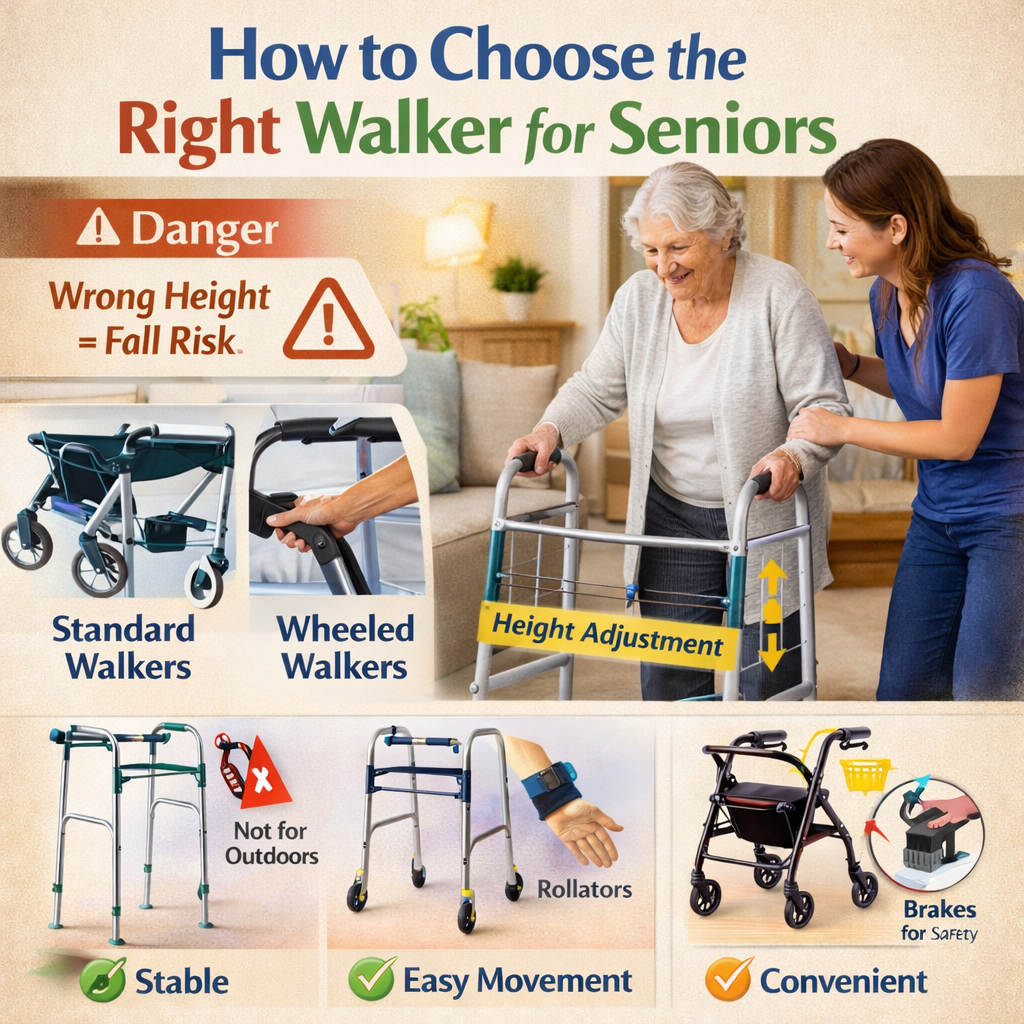
1. Standard Walker (No Wheels)
Best for maximum stability.
But here’s the truth:
- Requires lifting with each step
- Can be exhausting
- Not ideal for long use
👉 Best for: very limited mobility
2. Two-Wheel Walker
More movement, less effort.
- Slides forward easier
- Still stable
👉 Best for: indoor use + moderate support
3. Rollator Walker (4 Wheels + Seat)
This is what most people buy.
And yes, it’s popular for a reason:
- Easy movement
- Built-in seat
- Good for outdoor use
But here’s the catch:
👉 It can feel “too fast” for some seniors
Even Reddit users mention this exact issue:
“the rollator is too fast… I’m afraid of her falling”
Real Buying Factors (What Actually Matters in Daily Use)
Forget marketing. This is what makes or breaks the experience.
1. Stability vs Mobility (You Can’t Ignore This)
Lightweight walkers are easy to move.
Heavy walkers are stable.
You need the balance.
- Weak users → more stability
- Active users → more mobility
2. Wheel Size Changes Everything
This is something almost nobody tells you.
- 6–7 inch wheels → indoor use
- 8–10 inch wheels → mixed use
- 10+ inch → outdoor terrain
Small wheels get stuck easily.
Large wheels glide better.
3. Seat (Not Optional for Many Seniors)
If the person gets tired quickly, seat is critical.
Good seat:
- Cushioned
- Wide
- Stable
Bad seat:
- Feels unsafe
- Never used
4. Weight of the Walker
Lightweight sounds good…
Until it feels unstable.
Heavier models:
- More secure
- Less portable
Light models:
- Easy to carry
- Less stable
5. Adjustability (Huge but Ignored)
Wrong height = bad posture + discomfort.
Proper setup:
- Elbows slightly bent
- Upright posture
Anything else = long-term pain.
6. Braking System (Critical for Safety)
Especially for rollators.
You need:
- Easy-to-use brakes
- Locking system when sitting
Without it:
👉 fall risk increases significantly
Real Product Examples (What Good Looks Like)
🔹 Everyday Lightweight Option

Foldable Rollator Walker with Seat
Lightweight rollator with adjustable height and all-terrain wheels for daily use.
Good for:
- Daily walking
- Indoor + outdoor
- Easy folding
🔹 Heavy-Duty Stability Option

MAXWALK Rollator Walker with Seat
All-terrain walker with large wheels and strong frame for maximum stability.
Good for:
- Outdoor use
- Uneven surfaces
- Higher weight support
🔹 2-in-1 Walker + Wheelchair

Medline Walker Transport Wheelchair Combo
Hybrid walker and transport chair for seniors needing both mobility and assisted movement.
Good for:
- Long outings
- Fatigue situations
- Caregiver support
PRODUCT COMPARISON TABLE
| Feature | Foldable Rollator Walker | MAXWALK Rollator | Medline Combo Walker |
|---|---|---|---|
| Weight | Light | Medium-Heavy | Heavy |
| Stability | Medium | High | Very High |
| Best Use | Daily use | Outdoor terrain | Long distance / assistance |
| Seat | Yes | Yes | Yes (full support) |
| Mobility | High | Medium | Low |
| Portability | Easy | Moderate | Difficult |
Common Mistakes People Regret
❌ Buying the cheapest option
→ Ends up unused
❌ Ignoring user comfort
→ Causes frustration
❌ Choosing “popular” instead of “suitable”
→ Wrong fit
Final Verdict (Real Advice)
If you want the safest choice:
👉 Get a rollator with medium wheels, strong brakes, and a comfortable seat
Not too light.
Not too heavy.
Balanced.
Because the truth is simple:
👉 The best walker is the one that actually gets used.
Disclaimer
This content is for informational purposes only and does not replace professional medical advice. Always consult a healthcare professional.
Share this content:



Post Comment