How to Prevent Falls in Elderly at Home: 10 Proven Safety Tips
How to Prevent Falls in Elderly at Home
Introduction (Hook + Experience)
Most caregivers don’t realize how fast things can change… until a fall happens.
One moment, your parent is walking to the bathroom. The next, they’re on the floor, confused, in pain, and suddenly everything feels fragile.
Falls are not just accidents.
They are usually the result of small, preventable risks stacking up over time.
According to global health data, falls are one of the leading causes of injury in older adults. But here’s what many people don’t realize:
👉 Most falls don’t happen because of one big mistake
👉 They happen because of 5–10 small ignored details
This guide breaks those down in a way you can actually use.
🔍 Why Elderly People Fall (Root Causes Most People Miss)
Before fixing the problem, you need to understand it.
Falls usually come from a combination of:
1. Muscle Weakness & Balance Loss
Aging reduces:
- leg strength
- reaction time
- coordination
Even standing up becomes a risk.
2. Medication Side Effects
Some medications cause:
- dizziness
- blurred vision
- sudden drops in blood pressure
This is one of the most overlooked risks.
3. Vision Problems
Poor depth perception = misjudging steps, edges, or objects.
4. Unsafe Home Environment
This is where YOU have control.
🏠 The Hidden Dangers Inside Most Homes
You think the house is safe because it always has been.
That’s the mistake.
Common risks:
- loose rugs sliding under feet
- shiny floors becoming slippery
- cables acting like traps
- clutter narrowing walking space
👉 A younger person adjusts instantly
👉 An elderly person doesn’t
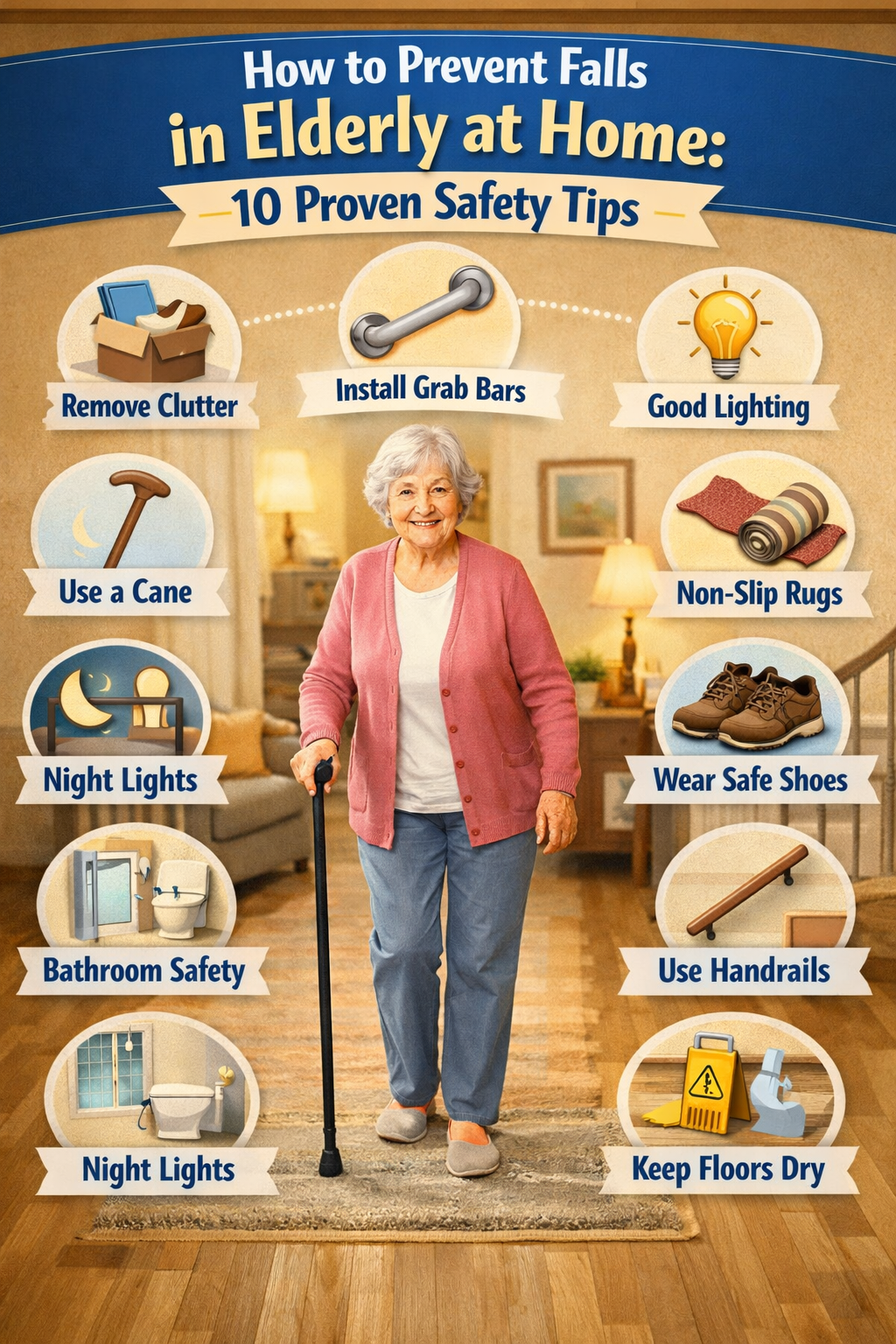
🛠️ 10 Practical Ways to Prevent Falls (Real-World Fixes)
1. Eliminate “Invisible” Trip Hazards
Walk through the house like someone with slower reflexes.
Fix:
- remove loose rugs
- secure wires
- clear pathways completely
2. Upgrade Lighting (Especially at Night)
Most falls happen:
👉 when visibility is low
Do this:
- motion sensor lights
- bedside lamps
- hallway lighting
Night navigation must be effortless.
3. Make the Bathroom Fall-Proof
If there’s one place to fix first, it’s here.
Install:
- grab bars
- non-slip mats
- shower chair
Bathrooms combine:
👉 water + hard surfaces = danger
4. Choose the Right Footwear
Walking barefoot might feel natural, but it’s risky.
Best option:
- non-slip soles
- closed shoes
- good grip
5. Rearrange Furniture for Movement, Not Looks
Forget aesthetics.
Think:
👉 Can someone walk here without turning sideways?
Create:
- wide paths
- open spaces
- no sharp corners
6. Address Medication Risks
If you notice:
- sudden dizziness
- balance issues
Don’t guess.
👉 Review medications with a doctor.
7. Keep Floors Dry at All Times
Even a small wet spot can cause a fall.
Especially in:
- kitchens
- bathrooms
8. Encourage Gentle Strength Exercises
You don’t need a gym.
Simple routines improve:
- balance
- muscle control
Even 10 minutes daily matters.
9. Use Assistive Devices Early (Not Late)
Most people resist walkers or canes.
Big mistake.
👉 Early use = prevention
👉 Late use = recovery
10. Control Night-Time Risk
Night is when people:
- rush
- feel disoriented
Fix:
- easy access lighting
- clear path to bathroom
⚠️ What Happens After a Fall (Why Prevention Matters More Than You Think)
Many people underestimate this.
A fall can lead to:
- hip fractures
- long-term immobility
- fear of walking again
And that fear alone:
👉 increases future fall risk
It becomes a cycle.
🧠 A Simple Daily Safety Checklist (Caregiver Shortcut)
Every day, quickly check:
- Is the floor clear?
- Is lighting working?
- Is the bathroom safe?
- Are they steady while walking?
Takes 2 minutes.
Prevents serious problems.
🤝 The Emotional Side Most Guides Ignore
Here’s the part nobody tells you:
Elderly people often don’t admit they’re at risk.
They say:
- “I’m fine”
- “I don’t need help”
But what they really fear is:
👉 losing independence
Your job is not just safety.
It’s protecting dignity while reducing risk.
🧾 Conclusion
Preventing falls is not about one big change.
It’s about small, consistent adjustments that create a safe environment over time.
And the earlier you start, the easier it is.
Because once a fall happens…
you’re no longer preventing — you’re recovering.
❓ FAQ
What is the biggest cause of falls in elderly?
Muscle weakness, unsafe environments, and medication side effects combined.
Can elderly falls really be prevented?
Yes. Most falls are preventable with proper home adjustments and awareness.
Should elderly always use a walker?
Not always, but early use can significantly reduce risk.
Share this content:




Post Comment